Designing a home office that is both cosy and productive is key to maintaining motivation and focus when working remotely or running a business from home. A well-thought-out space encourages efficiency while providing comfort, which can positively affect your work output and wellbeing. In this post, we’ll explore simple but effective ways to craft a home office that feels inviting and supports your daily tasks.
Importance of a Dedicated Workspace
Having a dedicated area for your work helps to create boundaries between professional and personal life. It signals to your brain that it’s time to concentrate, reduces distractions, and aids in maintaining a routine. Whether you have a spare room, a corner of the living room, or even a section of your bedroom, setting aside a specific space can make a significant difference.
Choosing the Right Location
Natural Light is Vital
Try to position your desk near a window to take advantage of natural light. Daylight helps regulate your circadian rhythm, improves mood, and reduces eye strain. If natural light is limited, opt for adjustable lamps with daylight bulbs to mimic this effect.
Consider Noise Levels
Look for a quiet spot where interruptions are minimal. If you can’t avoid some background noise, consider noise-cancelling headphones or a white noise machine to maintain concentration.
Furniture Selection for Comfort and Support
Desk and Chair
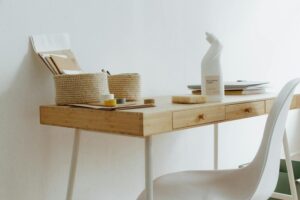
Invest in a sturdy desk that suits your work style—whether you prefer spreading out papers or working mainly on a laptop. Pair it with an ergonomic chair that supports your posture, helping you to avoid back pain during long hours.
Adjustable Features
Chairs and desks with adjustable heights let you customise your setup, promoting comfort and reducing strain. Standing desks or sit-stand converters are also great options to vary your position throughout the day.
Organising Your Space
Declutter and Prioritise
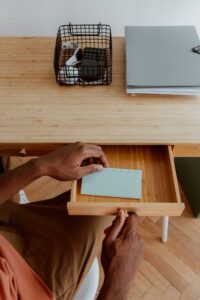
Keep only essential items on your desk to prevent distraction. Use drawers, shelves, or organisers to store paperwork and supplies neatly.
Smart Storage Solutions
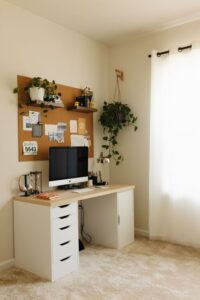
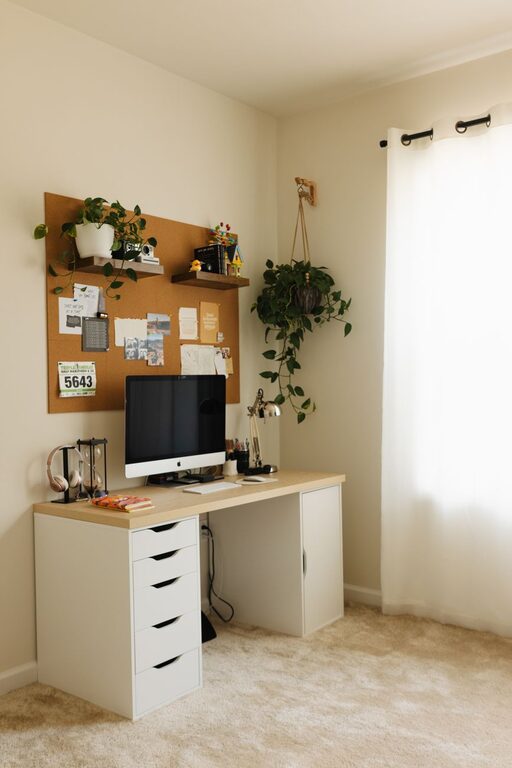
Consider multi-functional furniture, like filing cabinets doubling as side tables, or wall-mounted shelves to maximise space especially in smaller rooms.
Adding Personal and Cosy Touches
Colours and Decor
Choose calming colours like soft blues, greens, or neutrals to create a peaceful atmosphere. Simple artwork, plants, or cushions can add warmth without cluttering.
Textiles and Lighting
A cosy rug and soft cushions bring comfort, while warm lighting from desk lamps or fairy lights can create a welcoming ambience, especially in the darker months.
Technology and Connectivity
Organise Your Cables
Use cable organisers or clips to keep wires tidy. This prevents tangles and creates a cleaner look.
Reliable Equipment
Ensure your computer, internet connection, and other devices are reliable and fit for purpose to avoid frustration and downtime.
Encouraging Healthy Work Habits
Take Regular Breaks
Design your space so you can easily stand up, stretch, or move around to avoid stiffness and fatigue.
Keep Hydrated and Nourished
Have a dedicated spot for a water bottle or mug to remind you to stay hydrated, contributing to better concentration.
Final Thoughts
Creating a cosy and productive home office doesn’t require a big budget or a large space. By thoughtfully considering lighting, furniture, organisation, and personal touches, you can build a workspace that encourages productivity while remaining comfortable and inviting. Tailor your home office to your needs, and enjoy the benefits of working in an environment that supports both your work and wellbeing.